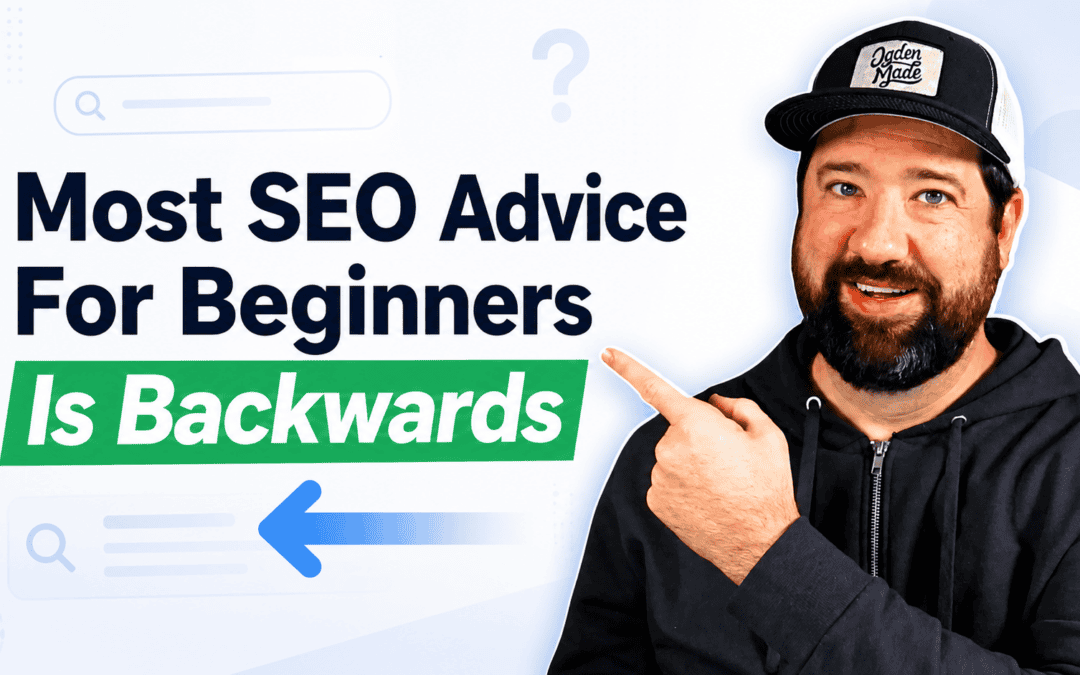
Most SEO advice for beginners starts in the wrong place. A lot of new business owners are told to focus on tools, plugins, tricks, and Google updates. Those things can matter later, but they are not the best place to start.
SEO starts with a much simpler idea.
Help the right person find the right answer at the right time.
That is what this video is about:
If you are new to SEO, this idea can help a lot. You do not need to know every SEO term to get started. You do not need to chase every new tip online.
You need to know what your customers are looking for. Then you need to answer their questions better than your competitors.
That is where good SEO advice begins.
SEO Is Not About Tricking Google
SEO is not about trying to trick Google.
Google wants to show helpful pages to people who are searching. So your job is not to fool Google, your job is to make your website helpful and clear. Your website should make it easy for people to understand what you do and it should also make it easy for Google to understand your business.
A good page tells people what service you offer. It explains who you help. It shows where you work. It answers common questions. It also gives people a clear next step.
That may sound simple, but many websites miss this.
Some pages are too vague. Some are too short. Some use words customers do not use. Some talk too much about the company and not enough about the customer’s problem.
Good SEO starts with clear answers.
Why SEO Feels So Confusing

SEO feels confusing because many people make it too hard at the start.
A new business owner may look up SEO tips and see words like backlinks, schema, crawl budget, domain authority, and algorithm updates.Those words can feel overwhelming.
Some of those things matter. But most new business owners do not need to start there.
A better first question is this:
What does my customer need to know before they call, buy, book, or visit my business?
That one question can guide your SEO plan. It can help you write better pages. It can help you choose better blog topics. It can help you improve your Google Business Profile. It can even help with AI search.
The Real Goal of SEO

The goal of SEO is not just more traffic.
More traffic sounds good. But traffic only helps when the right people visit your site. A lot of people may visit your website and never become a lead. That can happen when your content brings in the wrong audience.
The better goal is to bring in people who need what you offer.
For example, a local roofer may not need to rank for a broad word like “roof.” That word is too general. A better search might be “roof repair near me” or “how much does a roof replacement cost.” Those searches tell us more about the person. They may have a problem. They may need help soon. They may be close to calling a company.
That is why SEO is not just about keywords. It is about intent.
Intent means what the person really wants when they search. Do they want to learn? Do they want to compare? Do they want to find a local company? Do they want to buy now?
When you understand that, your content gets better.
Start With Customer Questions

Customer questions are one of the best places to start.
Your customers already tell you what they care about. They ask questions on calls. They ask questions in emails. They ask questions before they buy. Those questions can become website content.
For example, a pest control company may hear a question like, “Why do ants keep coming back?” That could become a blog post. It could also become a short video. It could become a section on a service page.
A lawn care company may hear, “Why is my lawn turning brown?” That could also become helpful content.
This works because you are not guessing. You are using the same questions real people ask. That matters because customers do not always use the same words business owners use.
A company may say, “We offer turf management.” A homeowner may say, “How do I get my grass green again?”
Good SEO uses words your customers understand.
A Simple SEO Framework for Beginners

A simple way to think about SEO is what we call the Right Answer SEO Framework.
The idea is simple.
First, know who you want to reach. Then find out what they are asking. After that, give them a clear answer. Make the page easy to understand. Then keep it up to date.
Let’s walk through each part.
1. Find the Right Person
SEO works better when you know who you are trying to help.
A lot of businesses want to reach everyone. But content that tries to reach everyone often feels too general. A lawn care company may help homeowners and business owners. But those two groups may not ask the same questions. A homeowner may want to know why the lawn has weeds. A business owner may want weekly mowing for a large property.
Both people need lawn care. But they need different answers.
When you know who you are talking to, your content becomes clearer.
2. Find the Right Question
Once you know who you want to help, find the question they are asking.
A search term is only a clue. The real goal is to know what the person needs. Someone who searches “best dentist near me” is likely ready to pick a dentist. Someone who searches “why does my tooth hurt when I drink cold water” may be trying to understand a problem.
Those searches are not the same. They need different types of content. One may need a local service page. The other may need a helpful blog post or FAQ.
When you know the question, you can give a better answer.
3. Give the Right Answer
Good SEO content answers the question clearly.
That does not mean every page has to be long. Some questions only need a short answer. Other questions need more detail.
The goal is not to add more words just to make the page longer.The goal is to be useful.
If someone searches for an emergency plumber, they do not want a long story. They want to know if you can help, where you work, how fast you respond, and how to call. If someone searches why a drain keeps clogging, they may want more detail. They may want to know the cause, what they can try, and when to call a plumber.
Good SEO matches the answer to the need.
4. Make the Page Easy to Understand
A good page should be easy to read and easy to scan.
Your title should be clear. Your headings should make sense. Your service and location should be easy to find. People should not have to guess what your business does. Google should not have to guess either.
This also matters for AI search.
AI tools need clear information. They need to understand your business, your services, your location, and your answers. If your website is vague, AI tools may have a harder time understanding it.
Clear content helps people, Google, and AI tools.
5. Keep Your Content Updated
SEO is not something you do once and forget.
Your business changes. Your services may change. Your prices may change. Your service area may grow. Your customers may ask new questions.
Your competitors also update their sites.
That means your content should be checked over time. An old page may still be useful. But it may need a better answer. It may need new examples. It may need fresh FAQs. It may need clearer wording.
Sometimes the best SEO task is not writing a new page. Sometimes the best task is improving a page you already have.
Where Keywords and Tools Fit In
Keywords still matter. SEO tools can help, too.
Links, site speed, and technical SEO also matter.
But those things should support the main goal. They should not replace it.
A tool can show you search data. But it cannot fully understand your customer. A plugin can help with page settings. But it cannot fix a weak answer. A keyword can guide you. But the page still needs to help a real person.
That is why new business owners should not start by chasing every SEO trick.
Start with the customer. Then use tools to support the work.
How Local SEO Fits In

Local SEO helps people find nearby businesses.
If you run a local business, your website and Google Business Profile need to be clear. People should know where you are. They should know what areas you serve. They should know what services you offer.
Your reviews, photos, business info, and service pages all help tell that story.
Local SEO works best when your online presence is clear and consistent. If your website says one thing, your Google Business Profile says another, and your listings online are missing details, that can cause confusion.
A clear local SEO roadmap helps Google and customers understand your business.
How AI Search Fits In
AI search is changing how people find answers online, but the basic idea is still the same.
AI tools need clear, helpful information. They need to know who you are, what you do, and why your answer can be trusted.This is why simple, direct content matters.
Your website should answer real questions. It should explain your services. It should show your experience. It should be easy to understand.
AI search does not mean SEO is gone. It means clear content matters even more.
A Better Way to Learn SEO

If you are a business owner who wants more help with SEO, local SEO, Google Business Profile tips, and AI search, join our BKA Content Skool community.
It is the beginner-friendly place to learn how to get your business found on Google, AI search, and local search without feeling overwhelmed.

- Most SEO Advice for Beginners Is Backwards - May 28, 2026
- How Long Does It Take To Learn SEO in 2026? - May 28, 2026
- Ahrefs Study Reveals Schema Markup Isn’t Enough for AI Citations - May 14, 2026
