
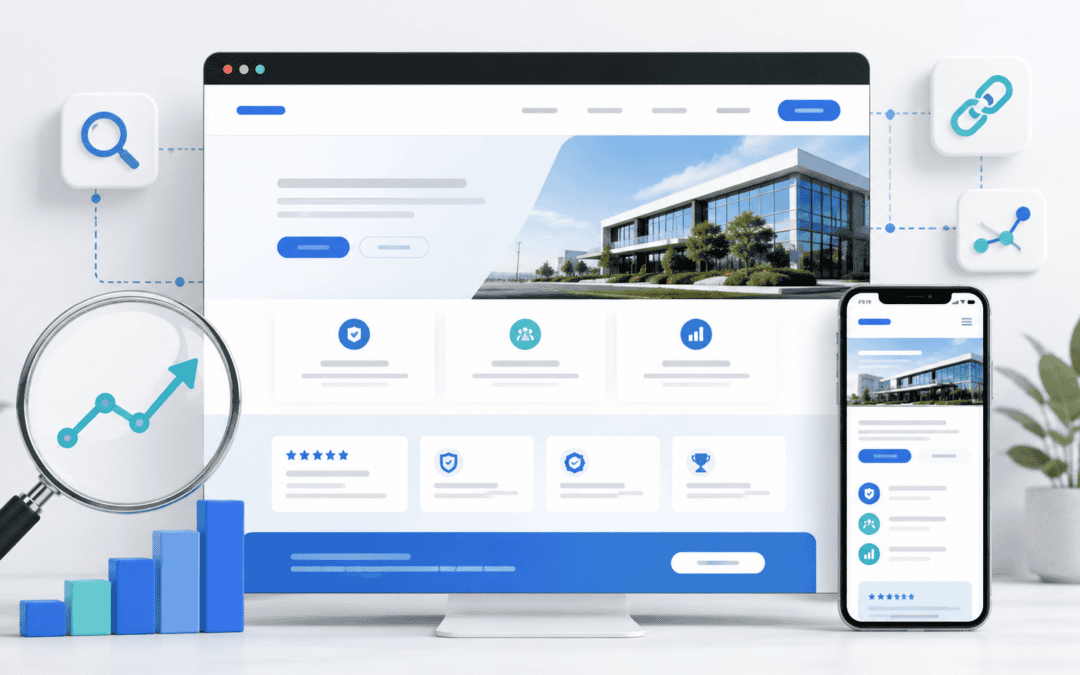
A homepage can look polished and still leave both visitors and search engines with unanswered questions. The problem is often not one obvious flaw. It is a series of decisions that seem reasonable on their own but do not work well together: broad messaging, too many keyword targets, buried service pages, weak calls to action, limited proof, or a mobile layout that makes important information hard to find.
For small businesses, those gaps can weaken visibility, confuse potential customers, and limit how well the rest of the site performs. These eight homepage SEO mistakes will help you spot what is getting in the way and where to focus first.
Mistake 1: Making the Homepage Too Vague
A homepage should quickly answer three questions: what you do, who you help, and where or how you serve them. If visitors have to search for those answers, they may leave before taking the next step. Clear, consistent information also helps traditional and AI-driven search systems better understand what your business offers and when it may be relevant.
For most small businesses, that means clearly naming your primary service or product category, intended audience, location or service area when relevant, and at least one specific reason customers can trust you.
Phrases such as “solutions for your needs” or “quality service you can trust” do not provide enough information on their own. Strong homepage copy explains what the business actually does and why it is a good fit for the customer.
Mistake 2: Targeting Too Many Keywords
A homepage can support SEO, but it should not try to rank for every service, city, and question at once. That usually leads to watered-down copy and confusing structure.
Use the homepage for your broadest business focus. Then use service pages, location pages, and blog posts to target more specific searches. Check out our website structure guide to learn more about the way in which smart site organization helps search engines understand how pages relate to each other.
For example, a roofing company homepage might target the broad business category and primary market. Separate service pages can target roof repair, roof replacement, metal roofing, and storm damage repair.
Mistake 3: Weak Title Tags and Headings
Your homepage title tag and H1 should work together. The title tag helps shape how the page may appear in search results, while the H1 confirms the business focus for visitors once they arrive.
Google explains that its search engine uses several sources to generate the title shown in search, including the title tag, visible headings, and other prominent text. A clear, descriptive title tag gives Google a stronger indication of how you want the page represented.
A title tag that includes only the business name often misses an opportunity to explain what the company offers. When it fits naturally, include the primary business category, service, or location.
For example:
Weak title tag:
Home | Johnson Company
Stronger title tag:
Residential Roofing in Ogden, UT | Johnson Roofing
Apply the same clarity to the H1. Avoid generic headlines such as “Built for Better” or “Solutions You Can Trust” unless nearby copy immediately explains the business. Use one clear primary heading that tells visitors what you offer, then use supporting headlines for additional services, benefits, and proof.
Mistake 4: Hiding Important Pages From the Homepage

Your homepage should guide people to the pages that matter most. If important service pages, product pages, location pages, or contact pages are buried, users may miss them and search engines may have fewer signals about priority.
Links help Google discover pages and understand relevance. The anchor text used should help people and Google accurately make sense of the destination page.
For homepage SEO, that means your main navigation and homepage sections should link to important pages with useful anchor text. For example, “Emergency plumbing services” is stronger than a vague “learn more” when the link points to that service page.
Mistake 5: Treating the Homepage Like a Brochure
A homepage should do more than introduce the company. It should help each visitor take the next logical step, whether that means exploring a service, requesting a quote, booking an appointment, joining a course, or reading a resource before making a decision.
The problem is that many homepages make broad claims without showing visitors where to go next. Organize the page around the questions customers are likely to ask, then use clear calls to action and relevant internal links to guide them toward the information or action they need.
This is the same practical approach we teach in BKA’s Skool community: define the page’s purpose, understand what the visitor is looking for, and make sure the homepage supports the larger website strategy.
Mistake 6: Ignoring Trust Signals
Customers need reasons to believe you. Search engines also benefit from clear, consistent signals that show the business is legitimate and relevant.
Homepage trust signals may include:
- Reviews or testimonials
- Years in business
- Certifications or credentials
- Service areas
- Case studies or results
- Associations or awards
- Clear contact information
- Photos of the team, work, or location
Do not overload the page. Choose the trust signals that matter most for your audience and put them where they support the decision-making process.
Mistake 7: Forgetting Mobile Design and Speed
Many customers will see your homepage on a phone. If the page loads slowly, has oversized images, hides important buttons, or makes the menu difficult to use, the experience can hurt both conversions and SEO performance.
Load speed is an important part of homepage optimization. Practical fixes include compressing images, reducing unnecessary scripts, and making sure the primary CTA is easy to find on mobile.
Mistake 8: Not Tracking Changes by URL
Homepage SEO should be measured. If you update the title tag, rewrite the intro, change internal links, and add trust signals, record those changes.
Our expert strategists recommend tracking SEO performance by URL because each page has its own role. For the homepage, watch branded search, relevant nonbranded queries, impressions, clicks, conversions, and whether visitors continue to service or contact pages.
Without accurate data tracking, it is hard to know whether a homepage update helped or whether another page caused the change.
Fix Homepage SEO Before You Build More Pages
Homepage SEO is not about stuffing your homepage with every keyword you want to rank for. It is about making the page clear, useful, connected, and measurable.
Start by clarifying what the homepage should do. Improve the title tag and H1. Link to the right pages. Add trust signals. Make the mobile experience easy. Then track the changes by URL.
If you want help building better homepage and webpage SEO, BKA Content's premium membership includes practical training that can help you create pages with a stronger strategy behind them.
FAQ About Homepage SEO
Homepage SEO is the process of optimizing your homepage so people and search engines can understand your business, navigate to important pages, and take the next step.
Your homepage should usually target your broadest business category, brand, and primary location or service area when relevant. More specific keywords usually belong on service, product, location, or blog pages.
Enough to explain the business clearly, support trust, and guide visitors to important pages. The homepage should not be thin, but it also should not try to answer every possible question.
Homepage SEO is one part of on-page SEO. On-page SEO can apply to any webpage, including service pages, product pages, location pages, and blog posts.

- What Are SEO Citations? A Guide for Small Businesses - August 14, 2026
- How To Find Keywords for Local SEO - August 12, 2026
- 8 Homepage SEO Mistakes That Keep Small Businesses From Ranking - August 6, 2026
