Key Takeaways
- Local SEO reaches a limit; businesses must seek external signals, such as local sponsorship links, for better rankings.
- Sponsorship links are affordable and powerful because they confirm business location and establish trust with Google.
- Use a simple Google search to find local SEO link sponsorship opportunities in your area by typing your city name followed by 'inurl:sponsors'.
- Ensure sponsorship links are do-follow to benefit your rankings; check link code for the absence of a 'nofollow' attribute.
- Avoid pursuing links in areas you do not serve; focus on your actual service locations for effective local link strategy.
If your Google Business Profile is fully optimized, your website is in good shape, and you are still stuck outside the local map pack, there is a good chance you are missing one key piece of an effective local SEO strategy - local link building.
At a certain point, local SEO stops being about what is on your website and starts being about what Google can verify outside of it. This post walks through a simple Google search you can use to uncover local sponsorship links that most businesses never think to look for. These links are affordable, highly local, and often stay live for years.
That combination is exactly why this local SEO link strategy WORKS.
Why Local SEO Often Hits a Wall
Most businesses follow the same path with local SEO strategy. They optimize their Google Business Profile. They clean up their website and build out service and location pages. They add FAQs and supporting content to answer common questions.
Then the rankings stall.
This happens because on page SEO has a ceiling. Once you hit it, Google needs external signals to build more trust in your business and confirm where you actually operate. One of the strongest signals Google can get is a link from another local organization in your area.
Not all links are equal. One strong local link can be more valuable than several generic links from unrelated sites. That is where sponsorship links come in.
Why Local Sponsorship Links Are So Powerful
A well placed local sponsorship link sends multiple signals to Google at the same time. It confirms that you operate in a specific location, that you are connected to local organizations, and that you are a real business, not just a website.
Unlike many local SEO link building strategies, sponsorship links are straightforward and relatively inexpensive. They also tend to be long-lasting. Most sponsorship pages do not disappear after a month. Many stay live for years, which turns them into a compounding SEO asset instead of a short-term boost.
The best part is that these opportunities are not hidden behind complicated outreach strategies. They are often hiding in plain sight.
The Simple Google Search That Finds Local Sponsorship Link Opportunities
Google already knows where local sponsorship pages exist. You just need to tell it how to surface them.
Open a blank Google window and type the following search:
Your city name followed by:inurl:sponsors
For example, if you are in Austin, you would search for:
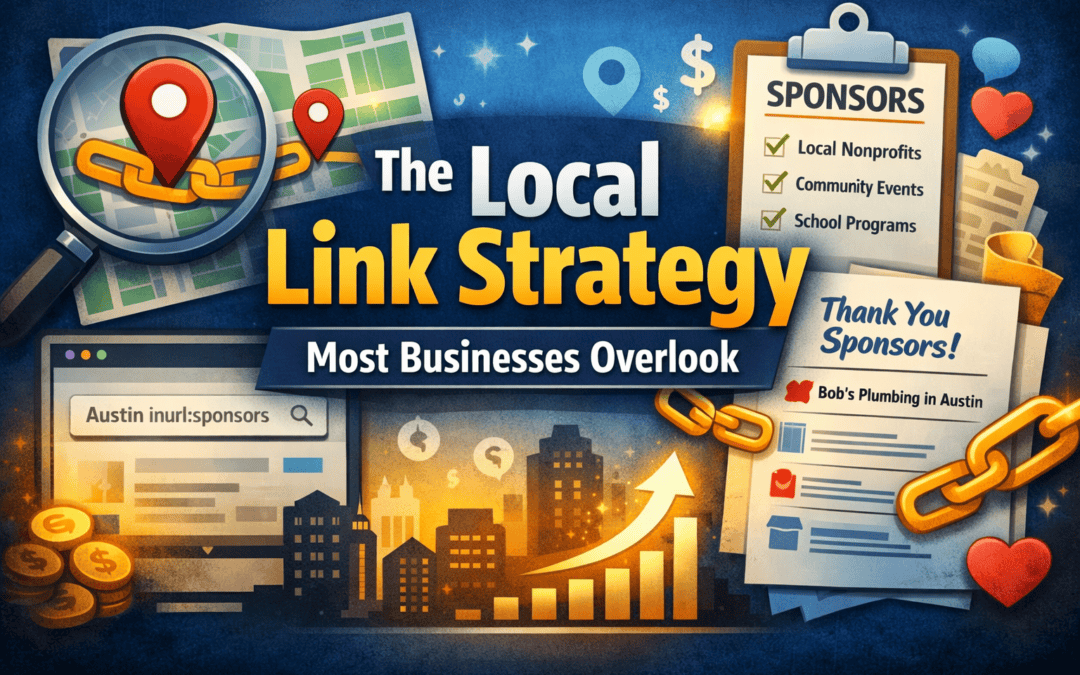
Austin inurl:sponsors
This search typically surfaces sponsorship pages for nonprofits, community organizations, events, charities, schools, and local media. These are exactly the types of sites that send strong local signals to Google, and the reason why you want to secure local links from them.
If the results feel cluttered, click “More” and then “Web” at the top of Google to view everything in a cleaner format.
What a Good Sponsorship Link Looks Like for Local SEO

When you click into these sponsorship pages, you will see a few common formats.
Some pages only include a logo that links out to your website. These links can still help, but they are not ideal because they do not include anchor text or context.
Better sponsorships include a clickable business name as anchor text. Even if the anchor text is just your brand name, that is still valuable for local SEO.
The best option for a local SEO link strategy includes both an anchor text link and a short blurb about your business. The blurb matters because Google reads the text surrounding the link, not just the link itself. That surrounding text helps Google understand what you do and where you operate.
For example, a blurb that mentions your service type and the city you serve adds semantic context that strengthens the link.
Anchor Text and Control Expectations
In most cases, you will not have full control over anchor text when getting a sponsorship link. Many organizations only allow your business name or brand name to be linked. That is perfectly fine.
If the site allows a short description or sponsor bio, that is where you can add additional context. Use that space to clearly mention your service, your city, and nearby areas you serve. Here is an example of a great local SEO anchor text situation where you get branding, a description and anchor text:

Even without keyword heavy anchor text, a branded link with strong surrounding context is very effective for local SEO.
Always Check for Do Follow Links
If you are paying for a sponsorship, you want to make sure the link is do follow.
To check this, right click on the link and select “Inspect.” Look at the link code and confirm there is no “nofollow” attribute present. If there is no nofollow tag, the link passes value and is worth pursuing.
This step only takes a few seconds and can save you from paying for links that do not actually help your local SEO rankings.
How to Reach Out for Sponsorships to Get Local Links

Once you have identified a few solid opportunities, outreach does not need to be complicated.
A simple message works best. Let them know you saw their sponsorship page, that you are a local business, and that you are interested in supporting what they do. Avoid any SEO language. Lead with support, not links. Here is a great example of a simple message you could send:

From there, you can clarify what the sponsorship includes, how much it costs, and whether it comes with a clickable link and a short description. Ideally, you want at least a branded anchor text link. A link plus a blurb is even better.
If a sponsorship only offers a logo with no clickable text, it is usually not worth it.
Where This Link-building Tip Fits Into Your Overall Local SEO Strategy
Local sponsorship links are not the first thing you should do in your local SEO strategy. They work best after your Google Business Profile is optimized, your website structure is solid, and your on page SEO is dialed in.
Once those pieces are in place and rankings start to plateau, sponsorship links are a natural next step. They help you move beyond your site and build real world authority in the areas you serve.

Common Mistakes to Avoid
One of the biggest mistakes is chasing links in cities you do not actually serve. If you only work in Austin and nearby suburbs, focus your sponsorship searches on those areas only.
For each city you serve, you can repeat the same Google search using that city name. Your links and blurbs should clearly match your real service area. Trying to force relevance in cities you do not operate in defeats the entire purpose of local link building.
Local links should reinforce reality, not stretch it.
Bringing It All Together: Linking + Local SEO = Results!
Local sponsorship links are just one piece of a great local SEO strategy, but they are one of the most overlooked and effective pieces. When used at the right time, they can help push your business into the map pack when everything else is already in place.
If you want a complete framework for local SEO and a step by step approach our team uses with clients, you can join our Skool community and access the best local SEO course. Inside, we break down exactly how to build visibility and trust so your business can compete in local search.
And if this strategy helped clarify your next move, keep an eye out for more local SEO tips and deep dives like this.
Or, if you're ready to let the SEO experts help, learn more about our Local SEO services where we can help with Google Business Profile Optimization, building local citations and even help you with site structure like SEO location pages and more!

- The Hidden SEO Problem That Content Couldn’t Fix - March 30, 2026
- BKA Content Co-Founder Speaks About SEO At Weber State University - March 18, 2026
- The SEO Strategy That Generated 15,000 Rankings - March 9, 2026